
 Earn with Nexo
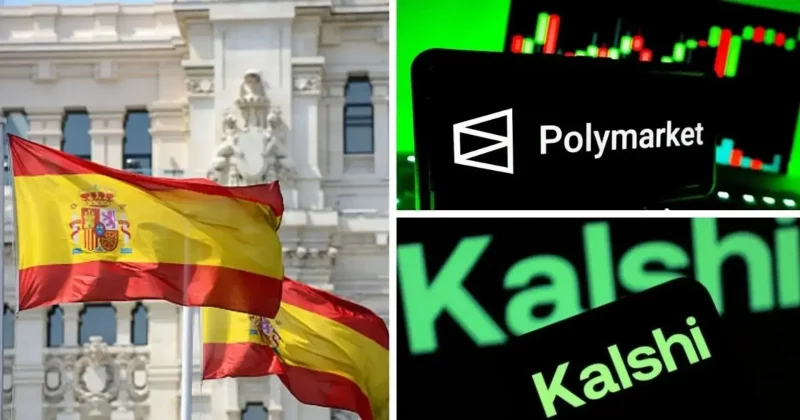
Spain blocks Polymarket, Kalshi over unlicensed betting products
Spanish regulators ordered ISPs to restrict access to both prediction market platforms for up to four months while formal investigations proceed.
Spain’s gambling regulator just told two of the world’s biggest prediction markets to take a seat. The Dirección General de Ordenación del Juego (DGOJ) issued orders on May 26 to block access to both Polymarket and Kalshi, directing internet service providers across the country to cut off the platforms for an estimated three to four months.
The reason is straightforward: neither platform holds a Spanish gambling license, and regulators consider their products, which let users wager on uncertain future events, to be exactly that. Gambling.
What Spain’s regulator actually did
The DGOJ published its directive in Spain’s official state gazette, giving ISPs a clear mandate to restrict access. This isn’t a permanent ban, at least not yet. It’s a temporary measure designed to hold the line while formal investigations unfold.
The regulator cited several consumer protection failures. These include the absence of identity verification, missing safeguards for minors, and no self-exclusion options for problem gamblers.
A global pattern is emerging
Spain isn’t freelancing here. It’s joining a growing list of countries that have decided prediction markets look a lot more like bookmakers than financial exchanges.
Brazil blocked more than 27 prediction market platforms on April 24, 2026, in one of the most aggressive moves yet. Indonesia and India have also taken recent regulatory actions against similar platforms.
This matters because Polymarket and Kalshi aren’t small operations. Together, they accounted for roughly 88% of all prediction market trading volume over the prior 30 days. Kalshi recorded approximately $5.9 billion in trades during that period, while Polymarket reached about $3.8 billion. Combined, that’s around $9.7 billion in monthly volume flowing through just two platforms.
Why this matters for crypto investors
Polymarket in particular has deep roots in the crypto ecosystem, settling trades on the Polygon blockchain. Its explosive growth during the 2024 US presidential election cycle turned it into one of crypto’s most visible mainstream crossover products. Kalshi, while operating as a regulated CFTC-registered exchange in the US, competes for the same audience of users looking to trade on event outcomes.
Look at the timeline. Brazil blocked 27-plus platforms in April. Spain followed in May. Indonesia and India are moving in the same direction.